The opposite of good is…. Short lived euphoria or profit taking? I was actually just looking for another reason to post this cool visual.
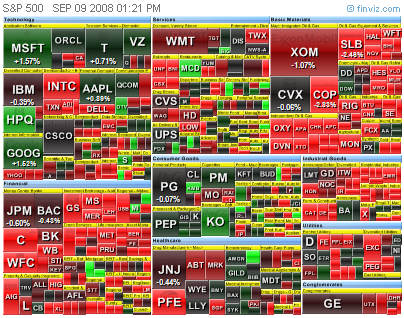
The opposite of good is…. Short lived euphoria or profit taking? I was actually just looking for another reason to post this cool visual.
A good day for most sectors although basic materials and a few of the 800lb gorillas of tech took it on the chin a bit as this nifty chart points out.
Paul Kedrosky references these groovy charts quite a bit and I finally clicked through to learn more about this little jewel from the folks at Finviz.com. Very cool visual.
Wow. Seems to be official that the US gov will be bailing out Freddie and Fannie.

From a look at the markets in Asia, the world still likes a US government guarantee. A bit of a counterpoint to those naysayers about the credibility of the US these days….
I'm still not sure if it is a good or bad thing but unlike most of the pundits, I will give some credit to those in the positions to make these decisions and believe that this was the right thing. Why? I'm not sure I totally grasp all of the angles although after reading Bob Rubin's book In an Uncertain World
While in NYC last week, I managed to find some time to walk a bit on a beautiful late summer day in the city and strolled by the former home of Bear Stearns on Madison Avenue. Not a trace left and closure for me.
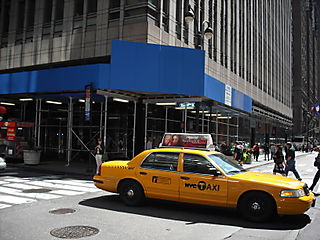
And here's a great picture of the Chrysler Building. I have always loved the design of it.

Ok, so I am doing my best to keep politics out of this blog but I can’t resist on this point.
Demonizing/criminalizing an industry group (big oil) and proposing to tax them because they made TOO MUCH money goes against the fundamental tenants of capitalism and free markets. I don’t like the price of fuel any more than the next guy and see this as a bigger issue about removing our dependency on all petroleum-based products vs. just gas.
Here’s a backgrounder on what a windfall profits tax is all about.
The government is there to ensure competitiveness and police corruption/collusion not to determine how much profit is too much. Doing this removes all incentives to increase shareholder value and drive maximum profitability. If we are going to begin to determine what is too much profit/wealth creation then we should apply this to all industries and individuals. How’s that sound?
Would you like the government to tell you when you’ve made enough money or when you’ve experienced too much stock appreciation?
Capping the profits companies can make and telling the electorate that you will redistribute this “excess profit” to them is not only bad policy but should offend any critically thinking person.
From the Financial Times:
“Merrill Lynch has sharply cut the use of private jets among its senior managing
directors by requiring them to obtain direct clearance from the global
head of investment banking to hire one and to demonstrate there is no
more efficient means of transport.”
“The restrictions on flying by private jet are also meant to demonstrate
that the firm’s top brass must set an example to the rank and file in
tightening belts. Other changes include requiring bankers to travel by
taxi rather than limousine and reduced allowances for dinner on the job.”
The horror….
Reading the coverage and statements about this, the image of a backstop came to mind so here you go:

What does all this mean? Again, I am not an economist or guru investor but safe to say this is a serious move. Either things are really this bad or they are perceived to be this bad so negative events occur on expectations alone. As Bear Stearns was failing, I read an article calling the brokerage business a “trust” business. Lose the trust, go out of business. That is what ultimately happened to Bear.
The ripples of credit market excess keep roiling the financial system and are currently tossing Fannie Mae and Freddie Mac about. These organizations play a significant role in keeping the mortgage market moving so their distress is a big deal. Treasury Secretary Paulson made this statement today and here are some additional details on what is on the horizon. As the former head Goldman Sachs, I assume Paulson not only knows the stakes but how to play the game. Plus, the guy is a former Eagle Scout so who better to be at the helm during this tempest.
the failure of a large bank (2nd largest ever according to the Drudge Report) can’t be good for any of us regardless of where we keep our dough or borrow our coin Of course, the well timed price target of $0 by FBR analyst Paul Miller should have been an indicator of sorts. RIP IndyMac…
I finished reading "A Bull in China
The book is a good read and covers a lot of ground in 200 pages including profiles of Chinese companies in various sectors.
I am still trying to find the actual excerpt that both struck me and sums up Rogers’ current investment thesis. In the meantime, here is my recollection:
1. Buy commodities
2. Invest in Chinese stocks
3. Get out of the US dollar
Or something to that effect. My national pride and general optimism about the US keeps me from abandoning the dollar, but there are ways to play all of these angles even for a hobbyist investor such as myself including DJP for commodities, FXI for Chinese stocks, and even a couple of new funds from Wisdomtree/Dreyfus that act as foreign currency money markets (CYB is the one for the Chinese Yuan). These are new like just listed this week new and as on-line financial voice and portfolio manager "Random" Roger Nusbaum points out, give them some time before jumping in.
Disclosure: I have owned DJP since reading Jim Rogers’ last book Hot Commodities
Thoughtful (of course) piece from Mark Anderson of Strategic News Service on our current credit market challenges and how we got here.

 Venture Vice