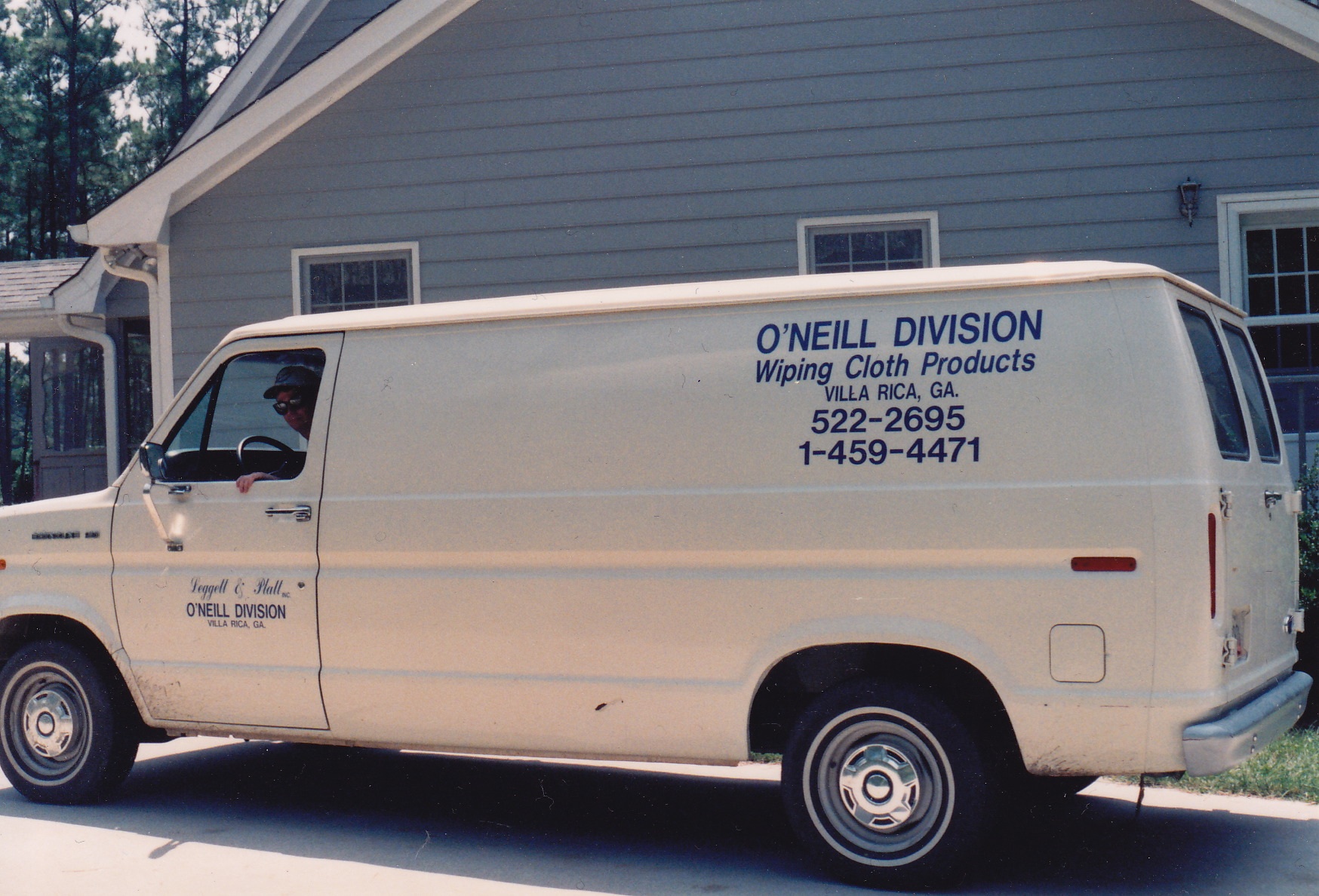
First Job

  RCP_LP_van

What was your first job?  The first thing you ever got paid for when you were a teenager?  You probably haven't thought about it in a long time so take a moment and think back to the first time someone paid you for doing something.  Cutting grass, flipping burgers, babysitting, or the like?

The truth is we all had a first job at some point in our lives and that first job is a critical piece to what makes us tick.  How?  The lessons learned, experiences gained, and ability to apply what on the surface seem like unrelated experiences is unmistakeably telling about someone as you evaluate them for a job, promotion, vote, award, etc.

One of my long time favorite intervew questions is to ask this.  It takes the interview beyond a resume and business environment (in my case) and puts it into an unexpected place for the person being interviewed.  I am no longer asking about the amazing accomplishments they are representing, I am now asking about something from their youth that they were unprepared to discuss and probably hadn't thought about for a very, very long time.  Thus, you get to the real person.

I have heard stories about everything from fast food and lifeguarding to detasseling corn and working in a funeral home.

The answer of what is not as important as the second part of the question – what did you learn from that experience that you apply every day today?

I have seen people completely freeze on this question which shows a lack of critical thinking and creativity.  I have heard some arrogant and unfortunate things like how stupid co-workers were or how demeaning the work was as well.

The ones I like the most hit on work ethic, accountability, and learning.  Those are the people I want on my side.

My first job?  I did some grass cutting in the neighborhood but what sticks out is the time working for Leggett & Platt in their Georgia operations.  My Dad led a business unit and my brother and I worked summers doing a variety of odd jobs around a textile mill and operations (also one Christmas break when I needed new tires for my car).  I worked with some amazing, hard working, and genuinely decent people.  Some were brilliant and others couldn't read but were brilliant in their ability to fix just about anything.

Unlike many of my peers at this stage of my life, I have worked on a shipping dock, driven a fork lift, cleaned up untold amounts of garbage, textile debris, hydraulic oil and other identified things.  This doesn't make be better than anyone, just different.  I understand distribution because I have gotten dirty doing it – not just writing it on a Powerpoint slide or saying it.

The pictures here are of me when I was 18 or 19 and had responsibility for making deliveries of industrial wiping products – rags.  Big and durable ones.  The kind that are used to clean wheel axles or drill bits or just about anything else.  I delivered 25 and 50 pound boxes just about everywhere.  I got lost a lot and had my fair share of harrowing experiences jockeying for a slot at a receiving dock with trucks much, much larger than me.  This was a major step up in responsibility and type of work after many summers in the shop and on the floor…and when there were no deliveries to be made I was right back there.  As you can imagine, I was always working hard to make sure there were deliveries…

RCP_LP_vanfull

What was your first job and what did you learn that you apply everday?  Share it with me and I'll post it here.


It’s not just about the technology

I have been wanting to create an animated video with Xtranormal for some time and finally got around to trying one out.  This is a really easy and clever way to produce animated clips with a script you write.  It is still a bit clunky in translation but that adds to the entertainment. 

Here's mine on the startup sales pitch to a business focusing on how it works vs. what it does and value delivered. 


This technology will only improve as time goes on making creating something like this easy for anyone and the end product polished like it was done by a professional.

My presentation to the University of Washington Entrepreneurial Strategy class tonight

I was very pleased to have friend and UW MBA student Max Effgen invite me to present to Dr. Jon Down's Entrepreneurial Strategy 510 class tonight.  I enjoyed great questions from smart people and Dr. Down was an amazing host.

I attempted to take a "lessons learned" approach in the presentation with an emphasis on getting started.  There are many business plans that never make it to step one of implmentation (including many of my own) and there is something to be said for just starting.

Here's my presentation which combines those lessons learned and an overview of Gist to reinforce and highlight much of the first part.  Enjoy!


Putting political attack ads in historical context

The volume and rhetoric is going full speed as we stumble towards election day.  As the attacks become more personal between candidates and the accusations more absurd – both direct and coordinated via interest groups and interested "media," there is a great deal of discussion about how nasty things have become and how we need to return to civility.

Think it really use to be more dignified and kind?  Thank again.  Although broadcast TV, cable "news," and Internet communciations seriously amplify it, the rhetoric and venom that has flown through campaigns in the past is epic.  Check this well done video that highlights the election of 1800 – Thomas Jefferson vs. John Adams.  This was a sitting Vice President running against the sitting President.  Think about that scenario today…


Four steps to getting started with social media

Agent Reboot Logo

I had the opportunity to be part of a panel discussion on social media at the most recent Agent Reboot event in Washington, DC.  It was great to be back to a place I lived for several years "back in the 90s."  Lots of familiar places and was able to reconnect with some friends while I was in town.

I framed my comments at the event to take a step way, way back from the hype and excitement around social media and explain what it is and that everybody can, and already does, do it.  Learning all the tools, tricks, and tips is another issue but there really is very little mystery surrounding it.

Here's why:

Fundamentally social media is about communicating with people.  Something we all know how to do and do every day in a variety of ways – meetings, phone calls, emails, etc.  The "social" piece of it focuses on participation.

More people from more places can come together and share, interact, and get updated all at one time or, more importantly, on their time complete with links, pictures, and a threaded view among other things. 

I suggested the following four steps to get started and this has been a recurring theme of ours in all of our presentations.

1.  Listen

You don't have to have anxiety about your writing, if you can be witty, or even spell correctly.  Start out by reading what others are sharing.  There is probably already somebody in your neighborhood doing this.  In Kirkland, WA (where I live) there are two local blogs I read that keep me informed about what is going on in my community – Kirkland Weblog and Kirkland Views.  Beyond where you live, find others writing about your interests, skills, or hobbies.  It is really easy to use Google to find these types of bloggers and you can also use Twitter search.

2.  Share

Now that you are reading interesting things by people in your neighborhood or written about your interests, you will no doubt want to share those with others.  Enter email.  Copy a link and paste it into the body of an email or share it directly via email from the post. You'll probably even add a bit of commentary on it as you share with friends or co-workers. Congratulations, you have now shared content. 

3. Comment

Now it is time to come out of the shadows and share some of that commentary you are adding to the emails with the world.  Read a post and comment directly on it.  The comments on a blog, especially a heavily trafficked one, are where the real conversation and insight unfolds.  Remember, do not self-promote.  Add something of value to the discussion…like you would if you were talking to a group of friends at a coffee shop.

4.  Contribute

If you have made it this far and really want to strike out on your own by publishing yourself, you have a variety of choices to make about tools, costs, time commitment, etc.  The tools are cheap, easy to learn, and just put yourself on a schedule to write a blog post a week.  Carry a notebook and write down random thoughts.  If you find yourself answering the same questions over and over for friends or co-workers, write a post and share that link next time (see #2 above).  Simplify your broadcasting by linking your blog to Twitter to Facebook to LinkedIn.  Or don't and control it.  It is your call and you are in control.

Even if you never move past Step 1 you will be better informed in your job or even at your next cookout


Some thoughts on your “brand”

Personal-branding
There is much discussion floating around these days about personal branding and how to use it to your advantage. 

Like most things the Internet has brought us, this is merely an extension of an individual's reputation and influence broadcast electronically.  The rise of blogs, short messaging services like Twitter, and social networks has intensified and increased the personal branding movement.  Unfortunately, along with it has come manipulation and false indicators of influence and relevance. 

Don't just look at how many people are following someone on Twitter (these can be purchased or easily collected), look at the ratio of followers to following.  Serial connection collectors are not building electronic networks that matter, they are merely chasing numbers like hapless road warriors chase frequent flyer miles (I can say this because I use to be one).

I had breakfast with a good friend last week and we were discussing this concept and how he could use elements of it to project his skills and creativity.  Here is my advice to defining and projecting your brand:

1.  Write

You need a platform to broadcast and a blog is an easy and cheap way to get one.  No formal writing experience required.  Two paragraphs make a blog post and you are the editor-in-chief.  Connect it to Twitter, Facebook, and LinkedIn and you have now tripled your reach and targeted your content to those in your network.  I use Typepad for this blog and WordPress is another great service.

Write enough blog posts and you have the foundation for a book.  Anyone can publish a book these days at relatively low cost and it remains a great way to put a tangible package around you and your brand.

2.  Share what defines you beyond your job

What are your hobbies, personal interests, what do you do on weekends?  All of these things define the complete picture of you beyond a stale resume or one dimensional on-line profile.  The dynamic nature of sharing content about your life gives you a ready made place to point people to learn more about you and what makes you tick. 

You'll be surprised how this can differentiate you from others.  Imagine looking at two proposals where the technical skills and price are the same.  One person has a blog that tells me about his love of the outdoors, a children's book he wrote with his wife, and the community where he lives.  He wins because he has shown creativity in other ways (a children's book plus the fact he writes a blog) and I expect that same creativity to be applied to my project.

3.  Look across your skills and use that to drive content

If you are an accountant, don't write about accounting.  Write about your involvment with that non-profit and the good/bad/ugly about raising funds and supporting causes.  Take your spin on the unique activities that you do everyday.  Also, avoid words like guru or expert to describe yourself.  Here is my take on self-described experts.

4.  Capture your thinking

I just wrote about my penchant for writing things down.  Do what works best but as thoughts cross your mind, get them down.  Whether that is paper, electronic, or even voice (try the voice recorder on your phone) the things that come to you randomly will be the best jumping off points to create content around.

5. Be real

We now can each tell our own electronic narrative of our lives and this is part of your personal brand.  Share but share wisely and understand that you are publishing for the world to read.  If you choose to cover controversial topics, do so with the understanding of the impact on your brand and the impression you will leave. 

Editorial protocols remain so be sure to get the green light from others if you are going to mention them by name or share details on a conversation.  I've had a few times where I wish I had put the NFYB (not for your blog) label on conversation which has now evolved to "don't tweet that."

Don't be someone you are not. No one likes a phony and one thing that will happen in a connected and collaborative world is that you will be called out – either in person or on-line. 

You'll be surprised how much you know, the exceptional things you do or are part of, and the rewards that come from forcing yourself to distill these things into words.

I seek to do elements of all of these things but don't have a laser focus on specfically building and projecting my brand. I have chosen "Reply to All" as a brand for this blog and that extends to my Twitter handle as well although most would advise to brand around your name first and foremost.

I appreciate all who read and comment on my posts…and have actually made some cool new connections and re-established lost ones from this effort.  All more than enough reward for something I just merely enjoy doing – writing.

Hope this is helpful.  Have thoughts or want to chat about it?  Leave a comment below or email me and we can connect.

You are not an expert

Well, at least most of you aren't. 

I come across self-proclaimed experts often and am always curious at the description because, to me, it means you no longer view yourself as needing to learn.  How can that be?  Innovation occurs, new understanding emerges, and lessons are learned. Labeling yourself an expert or including such a label in your bio should be reserved for those (few) who really are. 

Meaning…you are not a social media "expert."

I would suggest viewing yourself as a student focused on continual learning where you approach mastery but never get there.  Once you feel you've arrived, you will become stale and will be quickly passed by.  Malcolm Gladwell's book Outliers espouses the "10,000 Hour Rule" where that much time is required for mastery…essentially 10 years of doing something.  I think that concept has merit…but it does not make you an expert.

For added context, let's look at what "experts" thought in the past:

  • The planets revolved around the earth (the geocentric model)
  • The world was flat and you will sail right off the edge
  • 'There is a world market for maybe five computers' (Thomas Watson, IBM Chairman, 1943)
  • '640k should be enough for anybody' (Bill Gates, founder of Microsoft, 1981)

Why I write things down

  Moleskine

It does seem a bit peculiar to write a blog post about the reasons I still put pen to paper but as the number of electronic gadgets explodes and we spend more of our waking hours with our noses stuck in smart phones and iPads, I thought explaining why there is still a place for writing things down in my world seemed appropriate.

I have always carried a paper pad of some kind (steno, legal, etc.) around with me to take down notes or lay out my thinking on a topic or problem.  For years, I used a leather portfolio given to me when I graduated from college.  It is black, fits a legal pad, and has a pocket for papers – simple, but effective.

Always on the quest to learn new things by reading other's blogs, I saw a post from someone about using a Moleskine notebook to capture thoughts.  Paper and portable, I thought, count me in.

The Moleskine has a distinguished history hailing from Milan and used by the likes of Picasso, Hemingway, and Matisse.  More on the history here including its demise in 1986 and rebirth in 1997.  I capture nothing as distinguished but do find reviewing previous entries pretty fascinating and like the way it fits in my back pocket.

I was in Chicago last week meeting with some great folks ahead of an event and took out my Moleskine to jot down a name and phone number.  From the other side of the table, I heard "Don't you work for a technology company?"  This was all in good fun and I replied "Why yes, I do, but this is my secure and portable note taking application.  Instantly searchable (thumb pages) and encrypted because my handwriting can become undecipherable even by me."

We all laughed at the situation but it stuck with me and is the inspiration for this blog post.

I write things down because I want to remember them, reference them, and demonstrate to the other person that it is important enough to capture by hand.  A phone number, a name, a place, or a random thought…it doesn't matter.  I find it much easier to jot down a quick note when an idea comes to me or I am trying to organize tasks.  

This is part of my workstyle and I'm not saying it is for everyone or that a Moleskine is the key but it is how I capture important thoughts, detail follow up items, and organize my activities.